
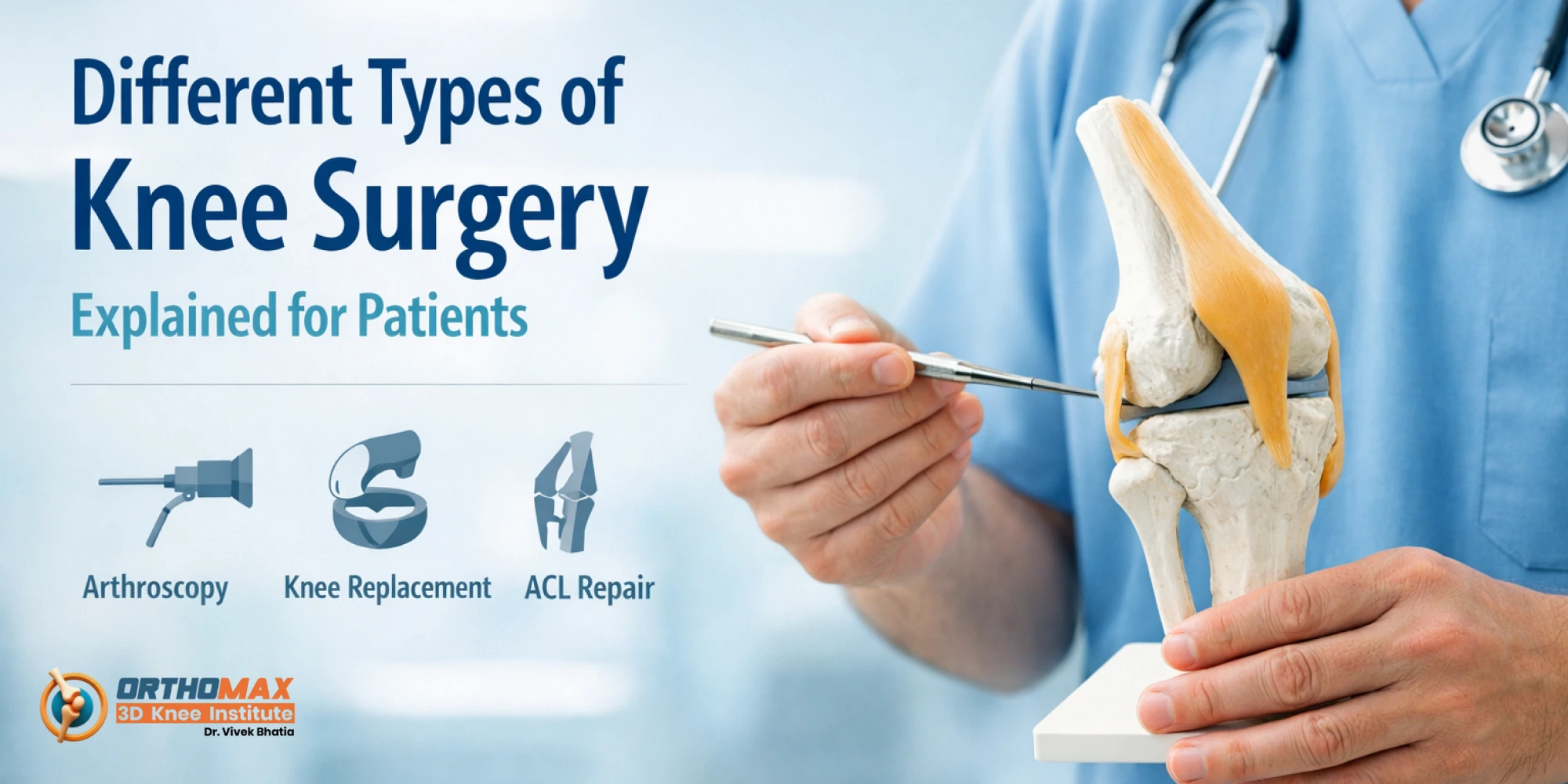
Different Types of Knee Surgery Explained for Patients
Knee pain can significantly impact your daily life—walking, climbing stairs, sitting, or even sleeping can become difficult. When medications, physiotherapy, or lifestyle changes fail to provide relief, doctors may recommend different types of knee surgery to restore movement and reduce pain.
This comprehensive guide explains different types of knee surgery. Whether you’re facing arthritis, ligament injuries, cartilage damage, or sports trauma, this blog will help you understand your options, recovery timelines, and what to expect before and after surgery.
Choosing the right surgical approach among the different types of knee surgery requires accurate diagnosis, advanced imaging, and experienced clinical judgment. At Orthomax 3D Knee Institute, our specialists focus on precise evaluation, personalized treatment planning, and technology-driven care to help patients achieve better mobility and faster recovery outcomes.
Why Do Patients Need Knee Surgery?
Knee surgery is usually recommended when non-surgical treatments such as medications, physiotherapy, injections, or lifestyle changes no longer provide sufficient relief. When knee pain becomes persistent and starts interfering with daily activities, surgery may be the most effective option to restore mobility, reduce discomfort, and improve overall quality of life.
Common reasons patients require knee surgery include:
- Severe knee arthritis, where the cartilage wears away, causing bone-on-bone friction, stiffness, and long-term pain
- Sports injuries, such as ACL or meniscus tears, that lead to knee instability, swelling, or repeated giving-way episodes
- Knee fractures or deformities resulting from accidents, falls, or long-standing alignment issues
- Cartilage wear and tear, which reduces shock absorption in the knee joint and limits smooth movement
- Chronic knee pain that restricts walking, climbing stairs, sitting, or standing for long periods
Choosing among the different types of knee surgery depends on several factors, including the patient’s age, activity level, severity and location of joint damage, overall health, and long-term mobility goals. A thorough evaluation by an orthopedic specialist helps determine the most appropriate surgical option for lasting relief and better knee function.
1. Knee Arthroscopy
Knee arthroscopy is one of the most commonly performed types of knee surgery and is widely preferred due to its minimally invasive nature. During this procedure, surgeons make very small incisions around the knee and insert a tiny camera called an arthroscope. This camera provides a clear, real-time view of the inside of the knee joint, allowing doctors to diagnose and treat problems with high precision using specialized surgical instruments.
Knee arthroscopy is often recommended for patients who have knee pain, swelling, or mechanical symptoms that do not improve with rest, medication, or physiotherapy. It is especially useful for treating internal knee damage without the need for large surgical cuts.
Conditions Treated:
- Meniscus tears that cause locking, clicking, or pain in the knee
- Loose bone or cartilage fragments that interfere with smooth joint movement
- Early-stage knee arthritis, where cleaning or smoothing damaged tissue can reduce symptoms
- Ligament injuries that require minor repair or assessment
Benefits:
- Smaller incisions, resulting in minimal tissue damage
- Less post-surgical pain and scarring compared to open surgery
- Faster recovery, allowing patients to return to daily activities sooner
- Lower risk of complications, such as infection or excessive bleeding
Recovery Time:
Most patients can resume basic daily activities within 2–6 weeks, depending on the extent of the procedure and adherence to rehabilitation. With proper physiotherapy and care, knee strength and mobility continue to improve over time.
2. Partial Knee Replacement
Partial knee replacement is one of the more advanced different types of knee surgery recommended when arthritis or joint damage is limited to only one compartment of the knee—either the inner, outer, or front section. Unlike total knee replacement, this procedure focuses only on the damaged area while preserving the healthy parts of the knee joint.
This surgical approach is ideal for patients who experience pain in a specific region of the knee rather than widespread joint damage. By retaining healthy bone, cartilage, and ligaments, partial knee replacement often feels more natural after surgery and allows for better knee movement.
Best For:
- Localized knee arthritis affecting a single compartment
- Patients with stable ligaments, especially a healthy ACL
- Active individuals who want to maintain a higher level of mobility
- Patients who have not responded to medications or physiotherapy
Advantages:
- Preserves healthy bone and tissue, resulting in a more natural-feeling knee
- Smaller incision and less disruption to surrounding muscles
- Reduced blood loss and lower surgical trauma
- Faster recovery and shorter hospital stay compared to total knee replacement
Recovery Time:
Most patients begin walking with support within a few days. With regular physiotherapy, recovery typically takes 4–8 weeks, allowing patients to return to daily activities sooner than with total knee replacement.
3. Total Knee Replacement (TKR)
Total knee replacement is one of the most commonly performed and well-established different types of knee surgery, particularly for patients suffering from advanced knee arthritis. This procedure is recommended when knee damage becomes severe enough that everyday movements like walking, bending, or standing cause constant pain and stiffness, significantly affecting quality of life.
When Is It Needed?
Total knee replacement may be advised in the following situations:
- Severe osteoarthritis or rheumatoid arthritis, where cartilage loss leads to bone-on-bone contact
- Chronic knee pain and stiffness that does not improve with medications, physiotherapy, or injections
- Failed conservative treatments, including painkillers, lifestyle changes, and joint-support therapies
- Limited mobility, making it difficult to perform daily activities such as climbing stairs or getting out of a chair
What Happens During Total Knee Replacement?
During total knee replacement surgery, the surgeon carefully removes damaged bone surfaces and worn-out cartilage from the knee joint. These damaged areas are then replaced with artificial implants made from durable metal alloys and medical-grade plastic. The implants are designed to replicate natural knee movement, reduce pain, and improve joint stability, allowing patients to return to an active and comfortable lifestyle.
Recovery Time and Rehabilitation
Recovery after total knee replacement varies from patient to patient and depends on overall health and rehabilitation commitment.
- Walking with support: Most patients begin walking with a walker or support within 1–2 weeks
- Physiotherapy phase: Structured rehabilitation helps restore strength, flexibility, and balance
- Full recovery: Typically achieved within 3–6 months, with continued improvement over time
With proper post-surgery care and physiotherapy, total knee replacement offers long-term pain relief and significant improvement in knee function for most patients.
4. ACL Reconstruction Surgery
ACL reconstruction surgery is a specialized and commonly performed procedure among the different types of knee surgery, especially for patients who experience knee instability after sports or high-impact injuries. The anterior cruciate ligament (ACL) plays a vital role in stabilizing the knee during activities that involve sudden stops, twisting, or jumping. When this ligament is torn, normal knee movement and confidence are often compromised.
Indications for ACL Reconstruction Surgery:
ACL reconstruction may be recommended if a patient experiences:
- A torn anterior cruciate ligament confirmed through MRI or clinical examination
- Knee instability, especially a feeling of the knee “giving way” during movement
- Difficulty returning to sports or physical activities, particularly those involving pivoting or rapid direction changes
- Recurrent swelling or pain after activity despite physiotherapy
Procedure:
During ACL reconstruction surgery, the damaged ligament is removed and replaced with a strong graft. This graft may be taken from the patient’s own hamstring, patellar tendon, or quadriceps tendon, or from a donor (allograft). The new ligament is carefully positioned and secured to restore knee stability and allow proper healing.
Recovery Time:
Recovery from ACL reconstruction typically takes 6–9 months and requires a structured rehabilitation program. Physiotherapy focuses on restoring knee strength, flexibility, balance, and coordination. Most patients can return to sports only after meeting specific strength and stability milestones, ensuring long-term success and reduced risk of re-injury.
5. Meniscus Repair or Meniscectomy
The meniscus is a C-shaped piece of cartilage that cushions and stabilizes the knee joint by absorbing shock during movement. It plays a critical role in protecting the bones of the knee from excessive wear. When the meniscus is torn due to sports injuries, sudden twisting movements, or age-related degeneration, one of the different types of knee surgery focused on cartilage treatment may be required.
Meniscus injuries are among the most common knee problems and can cause pain, swelling, stiffness, locking of the knee, or difficulty straightening the leg. The choice between meniscus repair or meniscectomy depends on the location, size, and severity of the tear, as well as the patient’s age and activity level.
Types of Meniscus Surgery:
- Meniscus repair: This procedure involves stitching the torn meniscus back together to preserve as much natural cartilage as possible. It is usually recommended for younger patients or when the tear is located in an area with good blood supply. Preserving the meniscus helps maintain long-term knee health and reduces the risk of future arthritis.
- Meniscectomy: In this procedure, the damaged portion of the meniscus is carefully removed to relieve pain and restore knee movement. Meniscectomy is often chosen when the tear cannot be repaired or when the cartilage damage is extensive. It provides faster symptom relief but removes some of the knee’s natural cushioning.
Recovery Time:
- Meniscus repair: Recovery typically takes 3–4 months, as the repaired cartilage needs time to heal. Rehabilitation includes restricted weight-bearing initially, followed by physiotherapy to restore strength and flexibility.
- Meniscectomy: Recovery is much quicker, with most patients returning to normal activities within 4–6 weeks, depending on rehabilitation progress.
6. Cartilage Restoration Surgery
Cartilage restoration surgery is a specialized and advanced option among the different types of knee surgery, designed to repair or regenerate damaged cartilage rather than replace the entire joint. This approach is particularly beneficial for younger patients or active individuals who have localized cartilage damage but otherwise healthy knee structures.
Unlike knee replacement surgery, cartilage restoration aims to preserve the natural knee joint and delay or prevent the need for joint replacement in the future.
Common Cartilage Restoration Techniques Include:
- Microfracture surgery – Small holes are created in the bone beneath the damaged cartilage to stimulate the body’s natural healing response and encourage new cartilage growth
- Autologous chondrocyte implantation (ACI) – Healthy cartilage cells are harvested, cultured in a lab, and later implanted into the damaged area
- Osteochondral grafting – Healthy cartilage and bone are transplanted from another area of the knee or a donor to replace the damaged section
Ideal Candidates for Cartilage Restoration Surgery:
- Patients with localized cartilage defects rather than widespread arthritis
- Active individuals who wish to return to sports or physically demanding activities
- Patients with stable knee ligaments and healthy surrounding tissue
Recovery Time and Rehabilitation:
Recovery after cartilage restoration surgery usually takes several months and requires strict adherence to physiotherapy protocols. Weight-bearing is often limited in the early stages, followed by gradual strengthening and mobility exercises. The exact recovery timeline depends on the specific technique used, the size of the cartilage defect, and the patient’s commitment to rehabilitation.
7. Knee Osteotomy
Knee osteotomy is a joint-preserving procedure among the different types of knee surgery, designed to delay or prevent the need for knee replacement. Instead of replacing the joint, this surgery corrects the alignment of the knee to reduce pressure on the damaged area and improve overall joint function.
Purpose of Knee Osteotomy:
- Realigns the knee joint by cutting and reshaping the bone to correct uneven weight distribution
- Shifts body weight away from damaged areas, reducing pain and slowing further cartilage deterioration
- Helps preserve the natural knee joint for as long as possible
Suitable For:
- Younger patients who want to stay active and delay joint replacement
- Individuals with early-stage knee arthritis limited to one side of the knee
- Patients with knee deformities such as bow legs or knock knees
Recovery Time:
Recovery after knee osteotomy usually takes 3–6 months. During this period, patients may need limited weight-bearing, physiotherapy, and gradual return to activities to ensure proper healing and long-term success.
How Doctors Decide the Right Type of Knee Surgery
Before recommending one of the different types of knee surgery, doctors consider:
- Age and lifestyle
- Severity and location of damage
- Imaging results (X-ray, MRI)
- Pain level and mobility expectations
A personalized approach leads to better outcomes and longer-lasting relief.
Risks and Complications of Knee Surgery
Although different types of knee surgery are generally safe, possible risks include:
- Infection
- Blood clots
- Implant wear or failure
- Stiffness or persistent pain
Choosing an experienced surgeon and following rehabilitation advice reduces these risks.
Recovery and Rehabilitation After Knee Surgery
Recovery is crucial for success after all different types of knee surgery.
Key Recovery Tips:
- Follow physiotherapy consistently
- Maintain a healthy body weight
- Avoid high-impact activities initially
- Attend all follow-up appointments
FAQs:
1. Which type of knee surgery has the fastest recovery?
Knee arthroscopy has the fastest recovery among different types of knee surgery. Most patients return to daily activities within 2–6 weeks due to its minimally invasive nature.
2. Is knee replacement the only option for knee arthritis?
No. Knee replacement is not the only option for arthritis. Depending on the stage and location of damage, partial knee replacement, knee osteotomy, or arthroscopic surgery may be suitable.
3. How long does pain last after knee surgery?
Pain after knee surgery usually reduces significantly within a few weeks. Complete recovery time varies based on the type of knee surgery, overall health, and rehabilitation compliance.
4. Can physiotherapy help avoid knee surgery?
Physiotherapy can help avoid knee surgery in early-stage knee conditions by improving strength and mobility. However, advanced arthritis or structural damage often requires surgical treatment.
5. Are all knee surgeries permanent solutions?
Not all knee surgeries are permanent solutions. Some procedures slow disease progression or delay joint replacement, while total knee replacement is considered a long-term solution.
Final Thoughts
Understanding different types of knee surgery helps patients make confident, informed healthcare decisions. Each knee condition is unique, and selecting the right surgical option depends on proper diagnosis, lifestyle needs, and long-term goals. Always consult a qualified orthopedic specialist to determine the most suitable treatment plan. Before undergoing any of the different types of knee surgery, proper planning plays a major role in recovery and long-term success. Learning how to prepare for knee surgery—including pre-surgery exercises, medication planning, home setup, and mental readiness—can significantly reduce complications and speed up rehabilitation.