
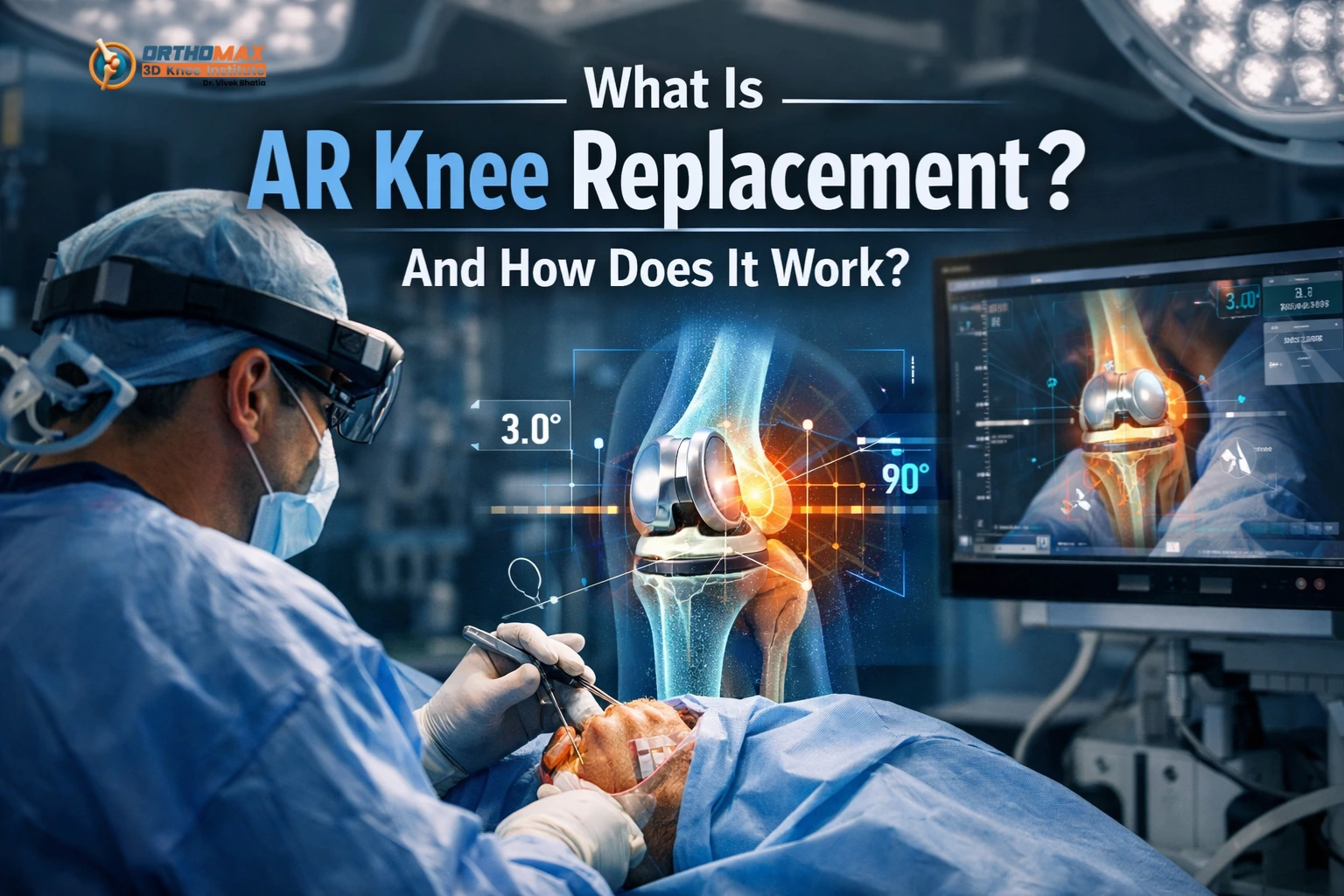
What Is AR Knee Replacement and How Does It Work?
Knee replacement surgery has come a long way over the years. From traditional manual techniques to computer-assisted procedures, orthopedic surgery has continuously evolved to improve accuracy, recovery time, and patient outcomes. One of the most exciting innovations shaping the future of orthopedic care is AR knee replacement, also known as augmented reality–assisted knee replacement.
This advanced surgical approach combines cutting-edge digital technology with real-time visualization to help surgeons perform knee replacement procedures with greater precision than ever before. But what exactly is AR knee replacement, and how does it work? Let’s explore this breakthrough in detail.
Understanding AR Knee Replacement
AR knee replacement uses augmented reality (AR) technology to assist surgeons during knee replacement surgery. Augmented reality overlays digital images, data, and guides onto the real-world surgical field, allowing the surgeon to “see” critical information without taking their eyes off the patient.
Unlike traditional knee replacement methods, which rely heavily on manual measurements and physical alignment tools, AR systems provide real-time, 3D visual guidance. This helps surgeons position implants more accurately, preserve healthy tissue, and achieve better joint alignment.
In simple terms, AR knee replacement enhances the surgeon’s vision and decision-making during surgery, leading to more predictable and personalized results for patients.
How AR Technology Is Used in Knee Replacement Surgery
Augmented reality in knee replacement works by combining several advanced technologies, including cameras, sensors, software algorithms, and wearable displays or screens.
Here’s how it fits into the surgical process:
- Digital mapping of the knee joint
- Real-time tracking of surgical instruments
- On-screen visualization of alignment and implant placement
- Instant feedback to the surgeon
Instead of frequently looking away at external monitors or relying solely on experience, surgeons can see precise guidance layered directly over the patient’s anatomy.
Step-by-Step: How AR Knee Replacement Works
1. Preoperative Planning
Before surgery, detailed imaging of the patient’s knee—such as CT scans or X-rays—is used to create a 3D digital model of the joint. This model allows surgeons to plan:
- Implant size and type
- Exact bone cuts
- Ideal alignment and positioning
This personalized planning ensures the surgery is tailored to the patient’s unique anatomy rather than a one-size-fits-all approach.
2. AR System Setup in the Operating Room
During surgery, AR equipment is set up in the operating room. This typically includes:
- Optical tracking cameras
- Sensors attached to surgical instruments
- A display system (monitor or wearable AR glasses)
The system continuously tracks the knee’s position and the movement of instruments with extreme accuracy.
3. Real-Time Augmented Visualization
As the surgeon operates, the AR system overlays digital information onto the live view of the knee. This may include:
- Bone alignment lines
- Cutting guides
- Implant positioning indicators
- Joint balance measurements
The surgeon receives instant visual feedback, helping them make precise adjustments during every step.
4. Accurate Implant Placement
One of the biggest challenges in knee replacement is ensuring proper alignment of the implant. Even small errors can affect mobility and implant lifespan.
AR technology guides the surgeon to place the implant at the exact planned angle and depth, reducing variability and improving long-term outcomes.
5. Final Verification and Completion
Before closing the surgical site, the AR system allows surgeons to verify:
- Knee alignment
- Range of motion
- Joint stability
Any necessary corrections can be made immediately, ensuring optimal results before the procedure is completed.
Benefits of AR Knee Replacement
AR-assisted knee replacement offers several advantages over traditional methods.
1. Improved Surgical Accuracy
AR systems provide millimeter-level precision, reducing the risk of misalignment and uneven implant placement.
2. Personalized Treatment
Every knee is different. AR allows for customized surgical planning based on the patient’s anatomy, improving comfort and function after surgery.
3. Better Joint Alignment
Proper alignment leads to smoother movement, reduced pain, and longer implant life.
4. Reduced Surgical Errors
Real-time feedback helps surgeons avoid mistakes and make immediate corrections during the procedure.
5. Faster Recovery for Patients
When implants are placed accurately, patients often experience improved mobility and potentially quicker rehabilitation.
AR Knee Replacement vs Traditional Knee Replacement
Traditional knee replacement relies on mechanical tools, alignment rods, and the surgeon’s experience. While effective, it may involve a higher margin of error.
AR knee replacement, on the other hand:
- Uses digital guidance instead of physical alignment tools
- Provides continuous real-time feedback
- Reduces dependency on manual estimation
- Enhances consistency across surgeries
This makes AR-assisted procedures especially valuable for complex cases or patients with unique joint anatomy.
Who Can Benefit from AR Knee Replacement?
AR knee replacement can benefit a wide range of patients, including:
- Individuals with severe knee arthritis
- Patients with joint deformities
- Younger patients seeking longer implant durability
- Active individuals wanting better post-surgery performance
However, suitability depends on factors such as overall health, bone quality, and the surgeon’s assessment.
Is AR Knee Replacement Safe?
Yes, AR knee replacement is considered safe when performed by trained orthopedic surgeons using approved systems. The technology does not replace the surgeon—it supports and enhances their expertise.
Clinical studies suggest that AR-assisted knee replacement can improve consistency and accuracy without increasing surgical risks. As with any surgery, outcomes also depend on surgical skill, rehabilitation, and patient compliance.
The Future of AR in Orthopedic Surgery
The use of augmented reality in knee replacement is still evolving. Future advancements may include:
- Integration with artificial intelligence (AI)
- More compact and wearable AR devices
- Enhanced real-time analytics
- Wider availability across hospitals
As technology advances, AR-assisted surgeries are expected to become more accessible and affordable, transforming orthopedic care worldwide.
Final Thoughts
AR knee replacement represents a significant leap forward in orthopedic surgery. By combining surgical expertise with augmented reality technology, it enhances precision, personalization, and patient outcomes.
While traditional knee replacement remains effective, AR-assisted procedures offer a glimpse into the future—where surgeries are smarter, safer, and more accurate. As awareness and adoption grow, AR knee replacement is set to redefine how knee surgeries are performed and experienced.
If you’re considering knee replacement surgery, discussing advanced options like AR-assisted techniques with an orthopedic specialist can help you make an informed decision about your care.