
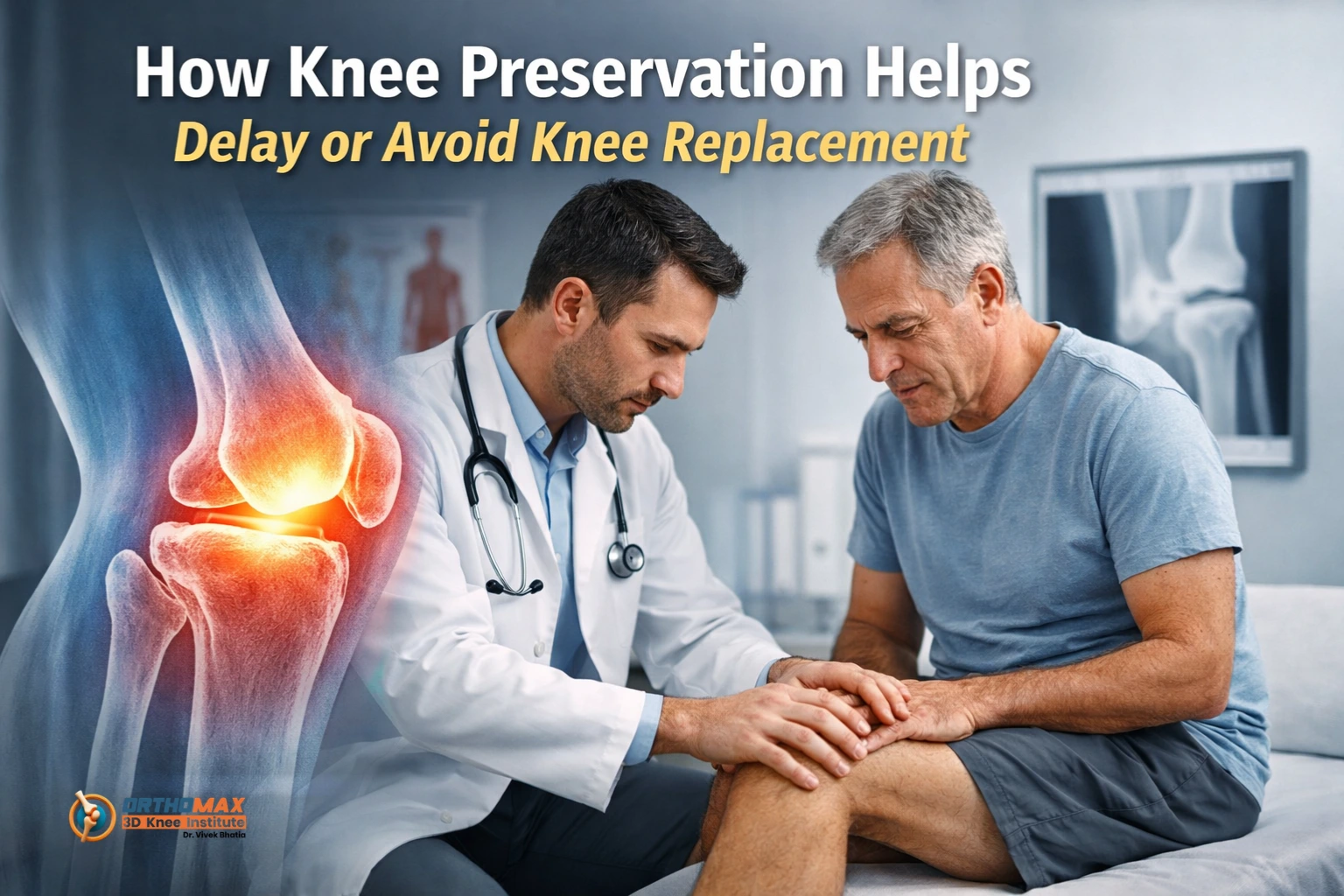
How Knee Preservation Helps Delay or Avoid Knee Replacement
Knee Preservation is becoming a preferred approach for patients who want to delay or avoid knee replacement surgery. Instead of replacing the entire joint, Knee Preservation focuses on protecting, repairing, and restoring natural knee structures. This strategy is especially beneficial for younger patients (ages 30–60), athletes, and individuals with early-stage osteoarthritis.
Globally, over 790,000 knee replacement surgeries are performed annually in the United States alone. Studies show that nearly 20–30% of patients under 60 may require revision surgery within 15–20 years. This is why Knee Preservation techniques are gaining attention—they help extend the life of your natural joint and reduce the need for artificial implants.
If you’re experiencing knee pain but want to avoid major surgery, understanding Knee Preservation can help you make an informed and confident decision.
What Is Knee Preservation?
Knee Preservation refers to advanced medical and surgical techniques designed to treat knee pain and structural damage while keeping the original joint intact. Instead of replacing the knee, orthopedic specialists correct the root cause of pain—whether it’s cartilage damage, meniscus tears, malalignment, or ligament instability.
Key Goals of Knee Preservation:
- Reduce pain
- Restore mobility
- Slow osteoarthritis progression
- Maintain natural biomechanics
- Delay or avoid knee replacement
This approach works best in patients with:
- Early to moderate osteoarthritis
- Localized cartilage damage
- Meniscal injuries
- Bowed or knock-knee alignment
- Ligament injuries like ACL tears
Why Avoid or Delay Knee Replacement?
Total knee replacement is highly effective for severe arthritis. However, it is still a major surgical procedure with certain limitations:
- Implants typically last 15–20 years
- Recovery can take 3–6 months
- Infection risk ranges from 1–2%
- Possibility of revision surgery
- Reduced ability for high-impact activities
For younger patients, delaying knee replacement is often recommended because revision surgeries are more complex and less predictable. Knee Preservation offers a joint-saving alternative before reaching that stage.
How Knee Preservation Helps Delay or Avoid Knee Replacement
1. Correcting Joint Alignment with Osteotomy
In patients with bowed legs (varus alignment), excess pressure falls on one side of the knee. This uneven load accelerates cartilage wear.
High Tibial Osteotomy (HTO):
- Realigns the knee joint
- Redistributes weight to healthier cartilage
- Significantly reduces pain
- Delays knee replacement by 8–15 years in many cases
Clinical studies report 70–90% success rates at 10 years in well-selected patients. By correcting alignment early, Knee Preservation reduces mechanical stress and slows joint degeneration.
2. Repairing Cartilage Instead of Replacing the Joint
Cartilage damage is one of the leading causes of chronic knee pain. Knee Preservation procedures stimulate new cartilage growth instead of removing or replacing the entire joint.
Microfracture Surgery
- Small holes are created in the bone
- Stimulates bone marrow cells to produce repair tissue
- Ideal for small cartilage defects
Autologous Chondrocyte Implantation (ACI)
- Patient’s cartilage cells are harvested
- Cultured in a laboratory
- Re-implanted into the damaged area
Research shows cartilage restoration procedures can significantly reduce pain and improve knee function for 5–10+ years, depending on the severity of damage.
3. Meniscus Preservation Instead of Removal
The meniscus acts as a shock absorber in the knee. Removing it increases arthritis risk by up to 7 times.
Modern Knee Preservation prioritizes:
- Meniscus repair instead of removal
- Meniscus transplantation in selected cases
Preserving the meniscus protects joint cartilage and slows degenerative changes, helping avoid early knee replacement.
4. Ligament Reconstruction for Joint Stability
Joint instability accelerates cartilage wear. ACL injuries can increase osteoarthritis risk by up to 4 times if untreated.
Ligament reconstruction:
- Restores joint stability
- Protects cartilage
- Prevents early degeneration
- Supports long-term Knee Preservation
By maintaining proper joint mechanics, Knee Preservation reduces abnormal stress on the knee.
Non-Surgical Knee Preservation Options
Knee Preservation is not always surgical. Early conservative treatment can significantly slow progression.
1. Physical Therapy
- Strengthens quadriceps and hamstrings
- Improves joint alignment
- Reduces pain by 30–40% in mild arthritis
2. Weight Management
Every 1 kg of body weight adds nearly 4 kg of pressure on the knee joint. Even modest weight loss can reduce symptoms significantly.
3. Biologic Injections
- Platelet-Rich Plasma (PRP)
- Stem cell therapy
- Hyaluronic acid injections
Many patients report symptom relief lasting 6–12 months, especially in early-stage arthritis.
Who Is the Ideal Candidate for Knee Preservation?
You may benefit from Knee Preservation if you:
- Are under 60 years old
- Have localized cartilage damage
- Have early-stage osteoarthritis
- Experience knee instability
- Want to remain physically active
Patients with advanced bone-on-bone arthritis may require knee replacement instead.
How Knee Preservation Supports Long-Term Joint Health
Knee Preservation focuses on correcting biomechanics. By restoring cartilage, stabilizing ligaments, and optimizing alignment, it:
- Slows osteoarthritis progression
- Maintains natural movement patterns
- Reduces inflammation
- Preserves bone structure
- Avoids implant-related complications
For many patients, this proactive approach can preserve joint function for years before knee replacement becomes necessary.
Frequently Asked Questions (FAQs)
1. What is Knee Preservation?
Knee Preservation is a set of treatments designed to repair and protect the natural knee joint to delay or avoid knee replacement surgery.
2. How long can Knee Preservation delay knee replacement?
Depending on the procedure and patient condition, it can delay knee replacement by 8–15 years.
3. Is Knee Preservation better than knee replacement?
For younger patients with early-stage damage, Knee Preservation may be preferable. Severe arthritis cases may require knee replacement.
4. Is Knee Preservation surgery painful?
Most procedures are minimally invasive and typically involve shorter recovery times than total knee replacement.
5. Can athletes benefit from Knee Preservation?
Yes. Many athletes return to sports after cartilage repair or ligament reconstruction procedures.
Final Thoughts
Knee Preservation is transforming orthopedic care by offering joint-saving solutions before considering knee replacement. Instead of immediately opting for artificial implants, patients now have advanced techniques that restore natural knee structures and function.
Early diagnosis and intervention significantly improve success rates. If you’re experiencing persistent knee pain, consult an orthopedic specialist to explore Knee Preservation options and determine the best treatment pathway for your condition.