
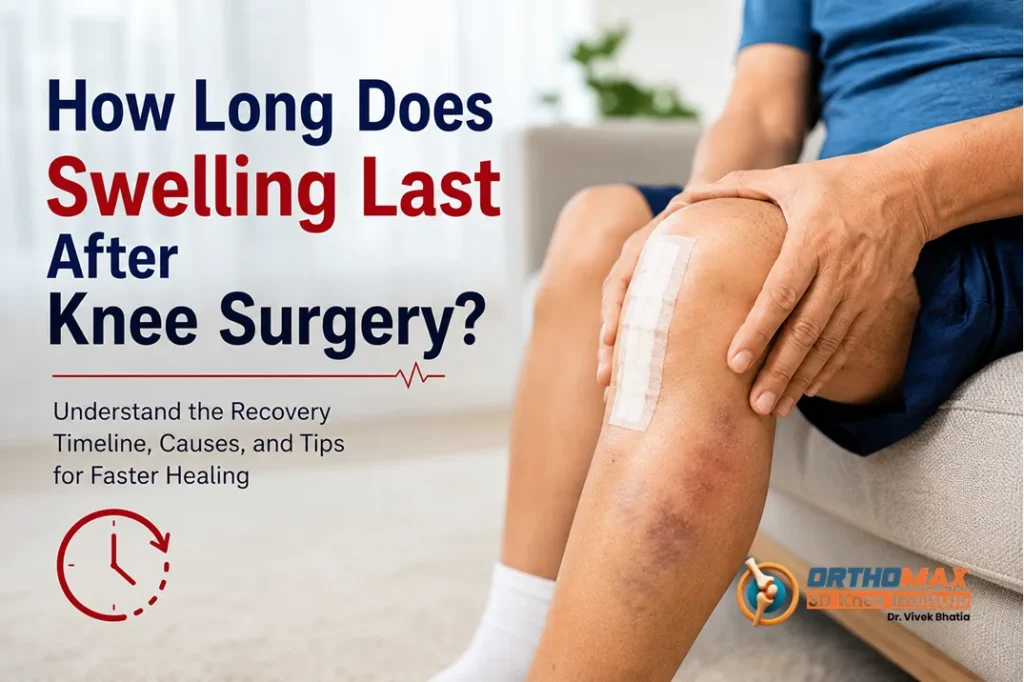
How Long Does Swelling Last After Knee Surgery?
Swelling after knee surgery is one of the most common concerns patients experience during healing. Understanding the knee surgery swelling recovery time helps set realistic expectations and reduces anxiety throughout recovery. Depending on the type of procedure, swelling may last anywhere from 2 weeks to several months, while mild residual swelling can continue for up to a year after major surgeries.
Whether you have undergone arthroscopy, ligament repair, or total knee replacement, knowing what is normal and what requires medical attention is essential. Recovery timelines vary, but following proper rehabilitation significantly improves healing outcomes. Patients seeking a broader understanding of recovery stages can also review a detailed knee surgery recovery timeline from hospital to home to understand long-term rehabilitation expectations.
This guide explains normal swelling, recovery timelines, warning signs, and ways to reduce swelling effectively.
Quick Answer: What Is the Normal Knee Surgery Swelling Recovery Time?
The knee surgery swelling recovery time depends largely on the procedure performed:
Surgery Type | Expected Swelling Duration |
Knee arthroscopy | 1–3 weeks |
ACL reconstruction | 2–6 weeks |
Meniscus surgery | 2–8 weeks |
Partial knee replacement | 1–3 months |
Total knee replacement | 3–6 months |
Revision knee surgery | Up to 12 months |
Research and orthopedic recovery observations suggest up to 90% of patients experience noticeable swelling in the first few weeks after knee replacement surgery.
For most patients, swelling gradually improves with movement, physiotherapy, and proper post-operative care.
Why Does Swelling Happen After Knee Surgery?
Swelling is a natural part of healing.
Following surgery, the body activates inflammation to repair damaged tissues. Increased blood flow brings oxygen and nutrients to the affected area but can also cause:
- Fluid buildup
- Temporary warmth
- Stiffness
- Reduced mobility
- Mild pain or discomfort
Swelling may increase after:
- Long periods of standing
- Walking too much
- Skipping rehabilitation exercises
- Returning to work early
- Sleeping without elevation
These factors often influence overall knee surgery swelling recovery time.
Knee Surgery Swelling Recovery Time by Healing Stage
Recovery does not happen all at once. Healing typically progresses in phases.
Week 1–2: Initial Healing Phase
During the first two weeks, swelling is usually most noticeable.
Common symptoms:
- Moderate to severe swelling
- Bruising
- Pain around the knee
- Difficulty bending the joint
Doctors commonly recommend the RICE method:
R – Rest
I – Ice
C – Compression
E – Elevation
Swelling during this phase is generally expected and does not usually indicate complications.
Week 3–6: Early Recovery Phase
As tissues heal, inflammation slowly decreases.
Patients may notice:
- Reduced swelling
- Improved movement
- Easier walking
- Lower pain levels
However, increasing activity too quickly may temporarily worsen swelling.
This period plays a major role in determining long-term knee surgery swelling recovery time.
Month 2–3: Functional Recovery
Many patients resume daily routines during this phase.
Some symptoms may remain:
- Mild stiffness
- Swelling after walking
- Tightness around the joint
People experiencing swelling after knee replacement surgery commonly continue physiotherapy at this stage.
Month 3–12: Long-Term Recovery
Major procedures such as total knee replacement often require extended healing.
Residual swelling may still occur after:
- Exercise
- Climbing stairs
- Travel
- Prolonged standing
Mild swelling months later is not always abnormal.
How Long Does Swelling After Knee Replacement Surgery Last?
One of the most common patient questions involves swelling after knee replacement surgery.
Typical recovery expectations:
- Severe swelling: First 2–6 weeks
- Moderate swelling: Up to 3 months
- Mild intermittent swelling: 6–12 months
The knee joint undergoes significant trauma during replacement surgery, meaning tissues require extended time to heal completely.
Therefore, occasional swelling months later does not automatically suggest complications.
Factors That Affect Knee Surgery Swelling Recovery Time
Not everyone heals at the same speed.
Several factors influence knee surgery swelling recovery time:
1. Type of Procedure
More invasive surgeries generally cause longer swelling.
Example:
Total knee replacement usually results in longer recovery than arthroscopy.
2. Age
Healing slows naturally with age because tissue regeneration becomes less efficient.
3. Body Weight
Higher body weight places greater pressure on recovering joints and may prolong swelling.
4. Physical Therapy Participation
Patients who consistently attend physiotherapy often experience:
- Better circulation
- Improved mobility
- Faster reduction in swelling
5. Existing Health Conditions
Recovery may slow in individuals with:
- Diabetes
- Arthritis
- Poor circulation
- Autoimmune conditions
Signs Your Swelling Is Normal
Post-operative swelling is often considered normal when it:
✓ Gradually improves over time
✓ Decreases after elevation
✓ Worsens temporarily after activity
✓ Appears with mild warmth but no severe redness
These symptoms generally indicate normal healing.
When Swelling May Signal a Problem
Seek immediate medical attention if swelling occurs alongside:
- Fever
- Severe redness
- Increasing pain
- Calf tenderness
- Shortness of breath
- Sudden worsening swelling
These symptoms may indicate:
- Infection
- Blood clot
- Deep vein thrombosis
- Surgical complications
Early treatment reduces risk significantly.
How to Reduce Knee Surgery Swelling Faster
Patients frequently ask how to improve knee surgery swelling recovery time.
The following strategies may help:
Elevate the Leg Properly
Keeping the knee above heart level helps reduce fluid accumulation.
Use Ice Therapy
Cold therapy can:
- Reduce inflammation
- Control swelling
- Ease discomfort
Apply ice for approximately 15–20 minutes at a time.
Wear Compression Support
Compression garments may improve circulation and reduce fluid retention.
Follow Physiotherapy Instructions
Rehabilitation exercises improve:
- Strength
- Flexibility
- Joint function
- Swelling reduction
Skipping physiotherapy often delays recovery.
Stay Hydrated
Adequate hydration supports circulation and tissue repair.
Focus on Nutrition
Recovery-supportive nutrients include:
- Protein
- Vitamin C
- Zinc
- Omega-3 fatty acids
Proper nutrition contributes to faster healing.
Is Swelling After Knee Replacement Surgery Always Normal?
Not always.
Swelling after knee replacement surgery is generally expected during healing, but persistent worsening symptoms require medical evaluation.
Normal swelling:
- Improves gradually
- Responds to icing
- Decreases with rest
Abnormal swelling:
- Rapid increase
- Severe pain
- Fever
- Redness spreading around incision
Monitoring changes over time is important.
Frequently Asked Questions
How long does swelling usually last after knee surgery?
The knee surgery swelling recovery time ranges from several weeks to several months depending on surgery type and individual healing speed.
Is swelling after knee replacement surgery normal?
Yes. Mild to moderate swelling after knee replacement surgery is common and may continue for months during tissue healing.
Can walking reduce swelling?
Controlled walking improves circulation and may help reduce swelling. Excessive activity, however, can worsen symptoms.
Why does swelling increase at night?
Fluid tends to accumulate during the day, making swelling more noticeable in the evening.
Can swelling return after improving?
Yes. Increased activity or prolonged standing can temporarily trigger swelling during recovery.
Conclusion
Understanding knee surgery swelling recovery time helps patients approach healing with realistic expectations. Minor procedures may improve within weeks, while swelling after knee replacement surgery can persist for several months before resolving fully.
Recovery is rarely perfectly linear. Temporary swelling after activity often occurs even during normal healing. Following rehabilitation, maintaining movement, and seeking medical advice concerning symptoms support better long-term outcomes.
Patience and consistent post-operative care remain two of the most important factors in successful knee recovery.