
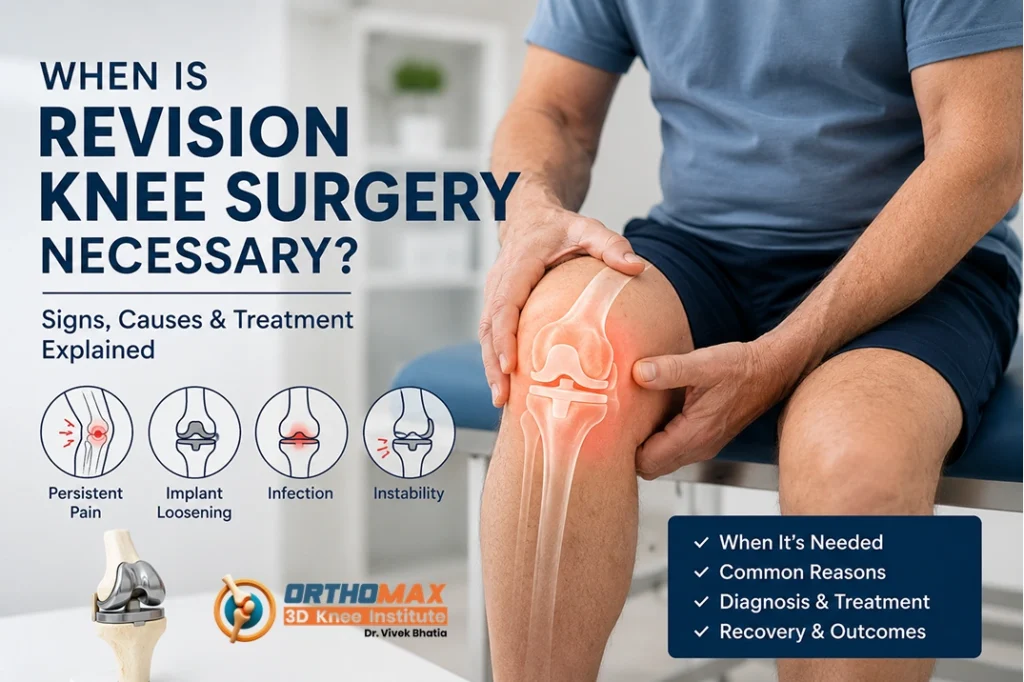
When Is Revision Knee Surgery Necessary?
Knee replacement surgery has helped millions of people worldwide regain mobility and live with less pain. However, even successful knee replacements may not last forever. Some patients develop complications years later, while others experience problems sooner than expected. In such cases, revision knee surgery India may become necessary to repair or replace a failed knee implant.
Understanding the early warning signs and reasons for revision knee surgery is important because delayed treatment can lead to worsening pain, instability, reduced mobility, and additional damage to surrounding bone or tissue. While many artificial knee implants function well for 15–20 years or more, factors such as infection, implant wear, trauma, or loosening can increase the risk of revision procedures.
This guide explains when revision knee surgery becomes necessary, common symptoms, causes, risk factors, recovery expectations, and preventive measures.
Quick Answer: When Is Revision Knee Surgery Necessary?
Revision knee surgery India is usually recommended when a previous knee replacement stops functioning properly or causes significant pain and mobility issues.
Common situations include:
- Persistent pain after knee replacement
- Implant loosening
- Infection around the artificial joint
- Implant wear over time
- Knee instability
- Fractures near the implant
- Stiffness limiting movement
- Implant misalignment
Not all discomfort means surgery is required, but long-term symptoms should be evaluated by an orthopedic specialist.
What Is Revision Knee Surgery?
Revision knee surgery India refers to a procedure where surgeons remove and replace part or all of an existing artificial knee implant.
Unlike initial knee replacement surgery, revision procedures are often more complex because surgeons may need to manage:
- Scar tissue
- Bone loss
- Damaged ligaments
- Infection
- Weak surrounding structures
The main goals are:
Reduce pain,
Improve mobility,
Restore joint function,
Correct implant-related complications
Because revision procedures are more challenging, early diagnosis remains important.
How Common Is Revision Knee Surgery?
Research indicates approximately 5–10% of knee replacement patients may eventually require revision procedures.
The likelihood depends on factors such as:
- Age at first replacement
- Weight
- Activity levels
- Implant quality
- Existing medical conditions
Patients receiving knee replacements at younger ages often face increased revision risks simply because implants experience longer wear.
Signs You May Need Revision Knee Surgery India
Recognizing symptoms early may improve treatment outcomes.
1. Persistent Pain After Knee Replacement
Mild discomfort after surgery is normal during recovery.
However, ongoing pain months or years later may indicate:
- Implant loosening
- Infection
- Alignment issues
- Wear and tear
Pain while walking, climbing stairs, or standing for long periods deserves evaluation.
Persistent pain remains one of the most frequent reasons for revision knee surgery.
2. Swelling That Does Not Improve
Temporary swelling is expected after surgery.
Long-term swelling may suggest:
- Infection
- Inflammation
- Implant failure
- Mechanical complications
Swelling combined with fever or redness requires urgent medical attention.
3. Knee Instability or Giving Way
Patients sometimes describe:
- Wobbling sensation
- Weakness while standing
- Fear of falling
Instability may develop because of:
- Ligament damage
- Implant loosening
- Alignment problems
Severe instability significantly affects daily activities.
4. Reduced Range of Motion
Difficulty bending or straightening the knee may indicate problems.
Warning signs include:
- Stiffness
- Reduced flexibility
- Trouble sitting or climbing stairs
Mobility limitations can affect quality of life and may indicate need for revision knee surgery India.
5. Clicking or Grinding Sounds
Artificial joints should function smoothly.
Persistent mechanical sensations such as:
- Clicking
- Grinding
- Popping
may signal implant wear or loosening.
6. Pain Returning Years After Knee Replacement
Some patients experience symptom-free years before discomfort returns.
New pain years later should never be ignored.
Major Reasons for Revision Knee Surgery
Understanding the reasons for revision knee surgery helps patients recognize risks.
Implant Loosening
Implant loosening remains among the leading causes.
Over time:
- Bone may separate from implant
- Components become unstable
- Pain increases
Symptoms often develop gradually.
Infection Around the Artificial Joint
Infection is one of the most serious reasons for revision knee surgery.
Symptoms include:
- Fever
- Swelling
- Redness
- Persistent pain
- Drainage around incision area
Studies estimate infection affects roughly 1–2% of knee replacement patients.
Deep infections often require revision surgery.
Wear and Tear of Implant Components
Artificial joints experience repeated stress.
Risk factors include:
- Obesity
- Younger age
- High-impact activities
- Heavy physical work
Implants may eventually wear out.
Fractures Around the Implant
Falls or accidents can damage surrounding bone.
These fractures often require surgical correction.
Implant Misalignment
Improper implant positioning may cause:
- Uneven pressure
- Pain
- Instability
Revision procedures may correct alignment problems.
Allergic Reaction to Implant Materials
Rarely, patients experience sensitivity to metal components.
Symptoms may include:
- Swelling
- Pain
- Inflammation
Who Has Higher Risk of Needing Revision Knee Surgery India?
Certain patients face increased risk.
Younger Patients
People undergoing replacement before age 60 may outlive implants.
Obesity
Higher body weight increases joint stress.
Diabetes
Diabetes may increase infection risk.
Smoking
Smoking affects healing and recovery.
High Physical Activity
Athletes or physically demanding jobs may accelerate implant wear.
How Doctors Diagnose Implant Problems
Determining whether revision knee surgery India is necessary usually involves several tests.
X-rays
Used to identify:
- Loosening
- Misalignment
- Bone damage
Blood Tests
May help detect infection.
MRI or CT Scan
Provides detailed images of surrounding tissues.
Joint Fluid Analysis
Testing fluid around the joint may reveal infection.
Accurate diagnosis helps avoid unnecessary procedures.
What Happens During Revision Knee Surgery?
The procedure generally includes:
- Removing damaged implants
- Cleaning infected tissue if present
- Repairing damaged bone
- Implanting new prosthetic components
Revision surgery often takes longer than initial replacement procedures.
Average surgery duration:
2–4+ hours
depending on complexity.
Is Revision Knee Surgery More Difficult Than Primary Knee Replacement?
Yes.
Revision procedures are generally more complex because surgeons may address:
- Bone loss
- Scar tissue
- Weak ligaments
- Previous surgical changes
Recovery may also take longer.
Recovery After Revision Knee Surgery India
Recovery varies significantly between patients.
Hospital Stay
Most patients remain hospitalized for:
3–7 days
Walking Support
Patients may use:
- Walkers
- Crutches
- Support devices
during early recovery.
Physical Therapy
Rehabilitation is essential.
Therapy helps improve:
- Strength
- Mobility
- Flexibility
Full Recovery Timeline
Recovery commonly takes:
6 months to 1 year
Some patients improve sooner while others require extended rehabilitation.
Best Diet Plan After Knee Replacement Surgery
A balanced diet plays an important role in recovery after knee replacement procedures and revision knee surgery India. Proper nutrition may help support tissue healing, maintain bone strength, reduce inflammation, and improve energy levels during rehabilitation. Foods rich in protein, calcium, vitamins, and fiber are often recommended to support recovery, while excessive processed foods and sugar may slow healing. Combining healthy eating habits with physiotherapy and medical follow-ups may improve overall recovery outcomes after surgery.
Can Revision Knee Surgery Be Prevented?
Not every case is avoidable.
However, risks may be reduced by:
- Maintaining healthy body weight
- Following rehabilitation programs
- Attending follow-up appointments
- Avoiding excessive joint stress
- Treating infections early
Regular monitoring may delay or prevent revision knee surgery India.
Common Mistakes Patients Make After Knee Replacement
Several habits increase revision risk.
Examples include:
Ignoring Persistent Pain
Pain should never be dismissed.
Missing Follow-Up Visits
Regular checkups help identify complications early.
Avoiding Physical Therapy
Poor rehabilitation may affect long-term outcomes.
Delaying Infection Treatment
Untreated infections can damage implants.
Returning to High-Impact Activities Too Soon
Excessive stress may accelerate implant wear.
Recognizing these mistakes early may reduce the need for revision procedures.
FAQs
How do I know if I need revision knee surgery?
Persistent pain, instability, swelling, reduced movement, or implant problems may require evaluation.
Is revision knee surgery successful?
Many patients experience pain reduction and improved mobility after treatment.
How long does a knee implant last?
Most modern implants function around 15–20 years, though lifespan varies.
What are the most common reasons for revision knee surgery?
Implant loosening, infection, instability, fractures, wear, and alignment problems are common causes.
Can revision surgery happen years after knee replacement?
Yes. Some patients require surgery many years later due to implant wear.
Is revision knee surgery painful?
Recovery discomfort occurs, but pain management strategies help improve comfort.
Conclusion
Understanding when revision knee surgery India becomes necessary helps patients identify warning signs early and seek timely treatment. Persistent pain, swelling, instability, reduced mobility, infection, and implant loosening remain among the most common reasons for revision knee surgery. While modern knee replacements often provide long-lasting results, complications can still occur over time.
Early diagnosis, regular orthopedic evaluations, and proper post-surgical care may reduce risks and improve long-term outcomes. Ignoring symptoms can sometimes worsen damage and make future treatment more complicated.
Although revision procedures are more complex than primary knee replacement surgery, advances in orthopedic technology, implant design, and rehabilitation continue to improve success rates across India. Patients experiencing unusual symptoms after knee replacement should seek medical guidance promptly rather than waiting for problems to progress.