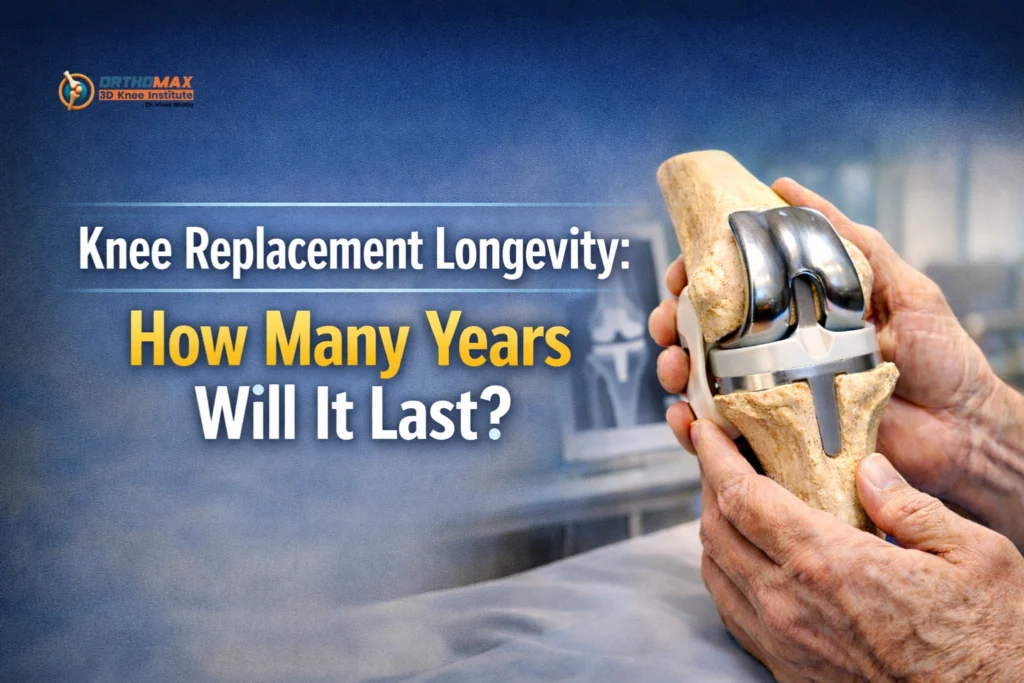
Knee Replacement Longevity: How Many Years Will It Last?
Knee Replacement Longevity: How Many Years Will It Last? If you’re considering knee surgery, one of the first questions you’ll ask is about knee replacement longevity. How long will the implant last? Will you need another surgery? What affects your knee replacement lifespan? These are valid concerns. A knee replacement is a major decision, and understanding knee replacement longevity helps you set realistic expectations, plan your future, and protect your investment in mobility. What Is Knee Replacement Longevity? Knee replacement longevity refers to the number of years an artificial knee joint continues to function properly without loosening, wearing out, or requiring revision surgery. In simple terms, it measures how durable and reliable your knee implant remains over time. When discussing knee replacement lifespan, it’s important to understand what makes up the artificial joint. A modern knee implant is carefully engineered using advanced biomaterials designed to reduce friction, improve stability, and extend durability. A typical knee replacement includes: Metal components made from cobalt-chromium or titanium alloys that form the femoral and tibial parts of the joint A plastic spacer crafted from highly cross-linked polyethylene, which acts as cartilage and allows smooth movement Cemented or cementless fixation that secures the implant firmly to the bone These materials are chosen for their strength, wear resistance, and compatibility with the human body. Thanks to material advancements, improved implant design, robotic-assisted alignment, and precision surgical techniques, knee replacement longevity has improved significantly over the past two decades. Compared to older implants that lasted 10–15 years, modern knee replacements now commonly function well for 15–25 years or longer in many patients. How Long Does a Knee Replacement Last? When patients ask about knee replacement longevity, they usually want a clear, evidence-based answer. The good news is that modern implants are highly durable and designed to function for decades under normal conditions. On average, the knee replacement lifespan today ranges between 15 to 25 years, depending on patient factors and surgical precision. With improvements in implant materials and alignment techniques, long-term survival rates have significantly improved compared to previous decades. Here’s what current data shows about knee replacement longevity: Average knee replacement lifespan: 15–25 years 90–95% of implants last at least 15 years 80–85% last 20 years or more These numbers indicate that most patients can expect long-term relief from pain and improved mobility for decades after surgery. What Does Research Say About Knee Replacement Longevity? High-quality registry data provides strong evidence regarding knee replacement longevity. A landmark 2019 study published in The Lancet analyzed outcomes from more than 60,000 patients who underwent total knee replacement. The results were reassuring: 93% of total knee replacements lasted 15 years 82% lasted 25 years This large-scale analysis significantly strengthens confidence in modern knee replacement lifespan expectations. However, it’s important to understand that knee replacement longevity is not identical for every patient. Longevity varies based on: Age at the time of surgery Body weight and BMI Activity level Implant type and materials Surgical alignment accuracy Presence of infection or complications In short, while research strongly supports long-term durability, individual results depend on multiple factors affecting knee replacement lifespan. Why Knee Replacement Longevity Has Improved Over Time Thirty years ago, the average knee replacement lifespan was around 10–15 years. Today, that number has increased due to: Better implant design Improved surgical techniques Robotic-assisted surgery Enhanced infection control More accurate alignment systems These advances directly impact knee replacement longevity by reducing wear and mechanical stress. Factors Affecting Knee Replacement Lifespan Understanding the factors affecting knee replacement lifespan is critical. Longevity isn’t just about the implant — it’s about the patient too. 1. Age at Surgery Younger patients (under 55) place more stress on implants Older patients tend to have longer-lasting implants A 45-year-old active patient may need revision surgery later, while a 70-year-old may never need another operation. 2. Body Weight Excess weight increases pressure on the joint. For every extra pound of body weight, your knee experiences 4 pounds of pressure while walking. Higher BMI is one of the strongest factors affecting knee replacement lifespan. 3. Activity Level High-impact activities such as: Running Jumping Competitive sports can reduce knee replacement longevity. Low-impact activities like walking, cycling, and swimming help preserve implant durability. 4. Implant Type & Material Different implants have different wear characteristics. Common materials include: Metal-on-polyethylene Ceramic-coated components Oxidized zirconium High-quality implants can significantly improve knee replacement lifespan. 5. Surgical Technique Alignment is everything. Even a 3-degree misalignment can increase wear rates dramatically. Robotic-assisted procedures improve precision, which directly improves knee replacement longevity. 6. Infection Risk Deep joint infection can lead to early implant failure. Although infection rates are low (1–2%), it remains a major factor affecting knee replacement lifespan. Signs Your Knee Replacement May Be Wearing Out Even with excellent knee replacement longevity, implants don’t last forever. Watch for: Increasing pain Swelling Instability Clicking or grinding Reduced mobility These symptoms may indicate loosening, wear, or implant failure. Can a Knee Replacement Last 30 Years? In some cases, yes. With: Proper weight management Moderate activity High-quality implant Skilled surgeon Some patients experience exceptional knee replacement lifespan exceeding 25–30 years. However, this is not guaranteed. How to Increase Knee Replacement Longevity If you want to maximize knee replacement longevity, follow these strategies: 1. Maintain a Healthy Weight Reducing weight reduces stress on the implant. Even losing 5–10 kg significantly improves knee replacement lifespan. 2. Choose Low-Impact Exercise Recommended activities: Walking Swimming Stationary cycling Yoga Avoid high-impact sports unless approved by your surgeon. 3. Follow Rehabilitation Properly Proper physiotherapy: Restores strength Improves alignment Reduces uneven wear Skipping rehab negatively affects knee replacement longevity. 4. Attend Regular Follow-Ups X-rays help detect early wear before symptoms appear. Early detection prevents major revision surgery. Partial vs Total Knee Replacement Longevity Type Average Lifespan Total Knee Replacement 15–25 years Partial Knee Replacement 10–20 years Partial replacements may wear out slightly sooner depending on remaining cartilage health. Cost vs Longevity: Is It Worth It? While cost varies globally: US: $30,000–$50,000 UK: NHS covers India: ₹2.5–5 lakh