
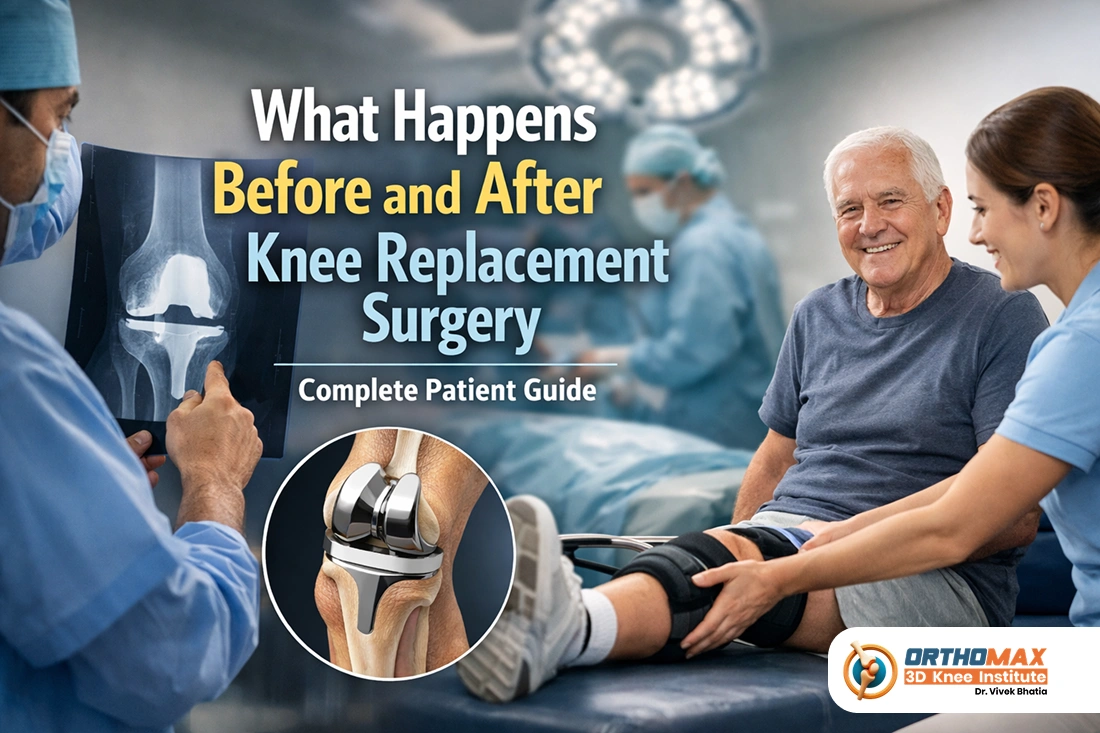
What Happens Before and After Knee Replacement Surgery: Complete Patient Guide
If you are considering knee replacement surgery, you probably have many questions — What tests are done before surgery? How painful is recovery? How long does it take to walk normally again?
This comprehensive guide explains in detail what happens before and after knee replacement surgery, including preparation steps, surgical procedure, hospital stay, recovery timeline, risks, and rehabilitation outcomes. The goal is to provide medically accurate, data-backed, and easy-to-understand information so patients can make confident healthcare decisions.
Understanding Knee Replacement Surgery
Knee replacement surgery, also known as knee arthroplasty, is a surgical procedure in which damaged cartilage and bone from the knee joint are removed and replaced with artificial implants made of metal alloys and high-grade plastic components.
It is commonly recommended for:
- Severe osteoarthritis
- Rheumatoid arthritis
- Post-traumatic arthritis
- Chronic knee pain not responding to medication or physiotherapy
More than 790,000 knee replacement surgeries are performed annually in the United States, with success rates exceeding 90–95% at 10 to 15 years. These numbers highlight the effectiveness and reliability of modern knee replacement surgery techniques.
What Happens Before Knee Replacement Surgery
Preparing properly for knee replacement surgery improves surgical outcomes and speeds up recovery. Below are the key steps involved before the procedure.
1. Comprehensive Medical Evaluation
Before knee replacement surgery, patients undergo detailed testing that may include:
- X-rays to assess joint damage
- MRI scans (if required)
- Blood tests
- ECG for heart evaluation
- Chest X-ray when indicated
Doctors also evaluate:
- Blood sugar levels (especially in diabetic patients)
- Blood pressure stability
- Body Mass Index (BMI)
- Any active infections
Proper medical optimization before knee replacement surgery can reduce complications by up to 30%.
2. Prehabilitation (Pre-Surgery Exercise Program)
Many orthopedic specialists recommend strengthening exercises before knee replacement surgery. This is called prehabilitation.
It focuses on:
- Quadriceps strengthening
- Hamstring conditioning
- Improving knee flexibility
- Learning how to use walkers or crutches
Studies show patients who complete 4–6 weeks of pre-surgery physiotherapy recover nearly 25% faster than those who do not.
3. Medication Management
Before knee replacement surgery:
- Blood thinners are typically stopped 5–7 days before surgery
- Anti-inflammatory medications may be paused
- Certain supplements are discontinued
This reduces bleeding risk and surgical complications.
4. Home Preparation Before Surgery
Preparing your home environment before knee replacement surgery ensures a safer recovery.
Recommendations include:
- Installing grab bars in bathrooms
- Using a raised toilet seat
- Removing loose rugs
- Arranging frequently used items within easy reach
Research suggests that proper home setup reduces fall risk by nearly 40% during the first month after surgery.
What Happens During Knee Replacement Surgery
The knee replacement surgery procedure typically lasts between 1 to 2 hours.
Step-by-Step Overview:
- Anesthesia (general or spinal) is administered.
- A surgical incision is made in front of the knee.
- Damaged cartilage and bone are carefully removed.
- Metal components are attached to the femur and tibia.
- A plastic spacer is inserted to allow smooth joint movement.
- The incision is closed with sutures or staples.
Average blood loss during knee replacement surgery ranges between 300 to 500 ml. Modern minimally invasive techniques reduce tissue trauma and promote faster healing.
What Happens Immediately After Knee Replacement Surgery
After knee replacement surgery, patients are moved to a recovery room for close monitoring.
1. Recovery Room Monitoring
Doctors monitor:
- Blood pressure
- Heart rate
- Oxygen levels
- Pain levels
Blood clot prevention measures begin immediately. Ice therapy is applied to reduce swelling. Most patients begin gentle knee movement within 24 hours.
2. Hospital Stay
Hospital stay after knee replacement surgery typically lasts:
- 1–3 days for most patients
- Same-day discharge in select cases
- Longer stays for elderly or high-risk individuals
Early movement significantly reduces blood clot risk.
Knee Replacement Surgery Recovery Timeline
Understanding recovery helps patients set realistic expectations.
Week 1–2
- Use walker or crutches
- Begin structured physiotherapy
- Manage swelling and discomfort
- Perform ankle pump exercises
Pain levels generally decrease by about 40% during the first two weeks.
Week 3–6
- Transition from walker to cane
- Improve knee bending (goal: 90–110 degrees)
- Resume light daily activities
Many patients resume driving between 4–6 weeks, depending on progress.
Three Months After Knee Replacement Surgery
- Significant pain relief
- 70–80% muscle strength recovery
- Return to low-impact activities like swimming or cycling
Six to Twelve Months
- Full recovery achieved
- Muscle strength restored
- Scar healing completed
Over 90% of patients report improved quality of life after knee replacement surgery.
Pain Management After Knee Replacement Surgery
Pain typically peaks within 48–72 hours after surgery and gradually improves.
Pain control methods include:
- Oral medications
- Nerve blocks
- Ice therapy
- Regular physiotherapy
Patients who follow rehabilitation programs strictly experience shorter recovery times and better mobility outcomes.
Risks and Complications After Knee Replacement Surgery
Although knee replacement surgery is considered safe, potential risks include:
- Blood clots (1–2%)
- Infection (less than 1%)
- Implant loosening over time
- Joint stiffness
Maintaining a healthy weight and attending regular follow-up appointments significantly reduces long-term risks.
Long-Term Success of Knee Replacement Surgery
Modern knee implants typically last:
- 15–20 years in 85–90% of patients
- Longer in patients who maintain an active but low-impact lifestyle
Advances such as robotic-assisted techniques have improved implant alignment accuracy by nearly 20%, enhancing durability and function.
Lifestyle After Knee Replacement Surgery
Most patients can:
- Walk comfortably
- Travel
- Climb stairs
- Perform daily activities without chronic pain
However, doctors advise avoiding:
- High-impact sports
- Jumping activities
- Heavy weightlifting
Low-impact exercises improve implant longevity and joint flexibility.
When to Contact Your Doctor
Seek immediate medical attention if you experience:
- Severe swelling
- Fever above 101°F
- Sudden calf pain
- Persistent wound discharge
Early medical intervention prevents serious complications.
Frequently Asked Questions (FAQs)
1. How painful is knee replacement surgery recovery?
Pain is moderate initially but improves significantly within 2–3 weeks with medication and therapy.
2. How long does knee replacement surgery take?
The procedure usually lasts 1–2 hours.
3. When can I walk normally after knee replacement surgery?
Most patients walk independently within 4–6 weeks.
4. How long do knee implants last?
Most implants last 15–20 years.
5. Is knee replacement surgery safe for elderly patients?
Yes, when proper medical evaluation and monitoring are done.
6. Can both knees be replaced at the same time?
Yes, bilateral knee replacement surgery is possible in selected patients.
Conclusion
Knee replacement surgery can be life-changing for patients suffering from chronic knee pain. By understanding what happens before and after knee replacement surgery, you can prepare better, recover faster, and reduce complications. With modern techniques and proper rehabilitation, most patients regain mobility and experience long-term pain relief. Preparation, physiotherapy, and follow-up care are the keys to a successful outcome.