
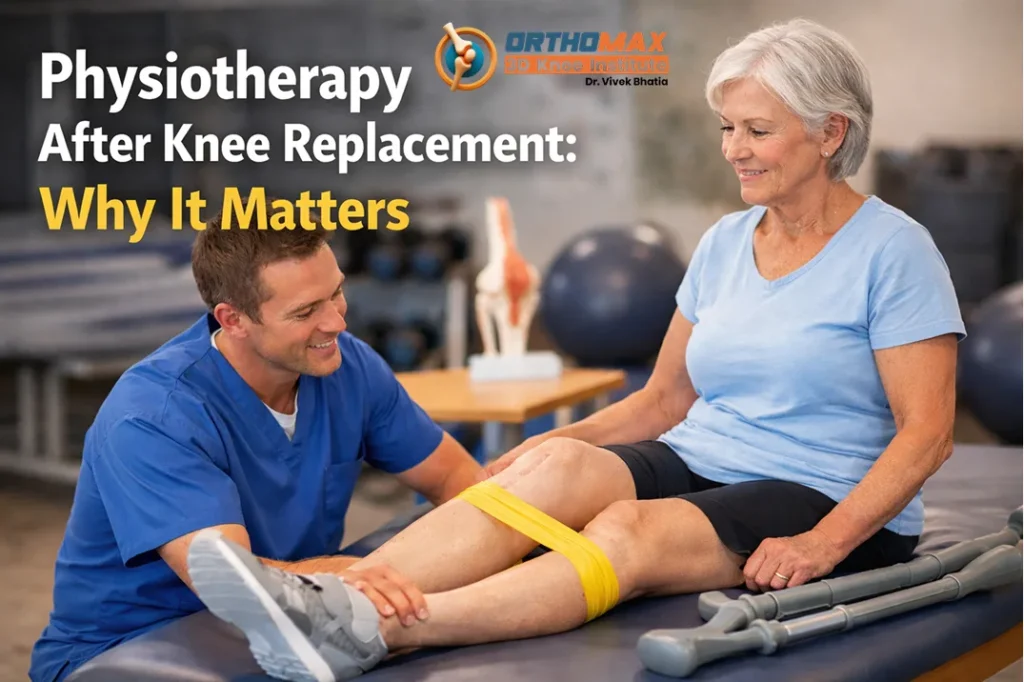
Importance of Physiotherapy After Knee Replacement: Why It Matters
Recovering from knee replacement isn’t just about rest—it’s about moving the right way at the right time. Physiotherapy plays a crucial role in reducing pain, improving mobility, and helping you return to normal life safely. Most patients in India recover faster and avoid complications when they follow a structured physiotherapy plan.
In India, where more than 2.5 lakh knee replacement surgeries are performed every year, patients who follow a proper physiotherapy routine recover significantly faster and experience better long-term results. Understanding how physiotherapy works and why it matters can help you achieve a smoother and more successful recovery.
What Is Physiotherapy After Knee Replacement?
Physiotherapy after knee replacement is a guided rehabilitation process designed to improve knee function after surgery. It focuses on:
- Restoring joint movement
- Strengthening muscles around the knee
- Reducing swelling and stiffness
- Improving balance and walking ability
This process usually begins within 24–48 hours after surgery and continues for several weeks or months, depending on recovery progress.
Why Physiotherapy is Important After Knee Replacement?
1. Faster Recovery and Improved Mobility
Following a structured physiotherapy plan helps patients regain mobility up to 30–50% faster. Early movement prevents stiffness and promotes healing.
2. Pain Reduction Naturally
Physiotherapy improves blood flow and reduces inflammation, helping control pain without overdependence on medication.
3. Prevents Post-Surgery Complications
Skipping physiotherapy can lead to:
- Joint stiffness
- Muscle weakness
- Blood clots
Regular sessions significantly reduce these risks.
4. Better Long-Term Outcomes
Studies show that patients who complete physiotherapy programs report 90–95% higher satisfaction rates after knee replacement surgery.
How Long Physiotherapy After Knee Replacement Is Required?
One of the first questions patients ask after surgery is simple: how long will physiotherapy actually be needed? The answer depends on your recovery speed, but most people follow a structured timeline. In the first few weeks, the focus is on basic movement and reducing stiffness. As your strength improves, exercises become more advanced, helping you walk and perform daily activities more comfortably.
Typical Recovery Timeline
- Week 1–3: Basic movement and gentle exercises
- Week 4–6: Strengthening and flexibility training
- Week 7–12: Advanced mobility and walking improvement
- 3–6 months: Full recovery and return to normal activities
Most patients require physiotherapy for 8–12 weeks, although full recovery may take up to 6 months depending on age, health, and consistency.
In India, many patients choose home physiotherapy, which typically costs between ₹500–₹1500 per session. Consistency is more important than the setting.
What You May Feel During Recovery
It’s natural to feel unsure about what recovery will be like. Many patients experience mild discomfort in the beginning, but this gradually improves with regular exercise.
You may notice:
- Mild pain or tightness during exercises
- Gradual improvement in walking (walker → cane → independent)
- Difficulty in climbing stairs initially
- Morning stiffness that reduces with movement
These are all normal signs of healing, and they improve with consistency.
Daily Physiotherapy Routine (Simple Plan)
Following a simple daily routine can make a big difference in recovery. Instead of doing everything at once, exercises are usually spread throughout the day.
A typical routine includes:
- Morning: Gentle bending and stretching exercises
- Afternoon: Strength-building exercises like leg raises
- Evening: Walking practice with support if needed
Spending 30–60 minutes daily on physiotherapy is usually enough to see progress.
Types of Physiotherapy Exercises After Knee Replacement
Recovery after knee replacement involves different types of exercises, each targeting mobility, strength, and daily function. These are usually introduced in stages as healing progresses.
Physiotherapy exercises after knee replacement are introduced in phases, starting with basic movement and progressing to strength and daily activities.
1. Range of Motion Exercises (Early Stage)
These exercises are usually started within the first few days after surgery to improve flexibility and reduce stiffness.
Common exercises include:
- Heel slides
- Knee bends
- Leg extensions
These help restore the knee’s ability to bend and straighten properly.
2. Strengthening Exercises (Recovery Phase)
Once basic movement improves, strengthening exercises are added to support the knee joint and surrounding muscles.
Examples:
- Straight leg raises
- Quadriceps sets
- Hamstring curls
Strong muscles reduce pressure on the knee and improve stability.
3. Walking and Balance Training (Progressive Stage)
As recovery progresses, patients are guided to improve walking and balance step by step.
Typical progression:
- Walker → Cane → Independent walking
This stage focuses on building confidence and preventing falls.
4. Functional Training (Daily Life Activities)
The final stage focuses on helping patients return to normal daily activities.
Includes:
- Climbing stairs
- Sitting and standing
- Light household tasks
The goal is to regain independence in everyday life.
Home vs Clinic Physiotherapy
After knee replacement surgery, choosing between home and clinic physiotherapy depends on your recovery stage, mobility, and comfort level. Both approaches have their own advantages, and most patients don’t need to stick to just one option. Instead, understanding how each works can help you make a better decision.
1. Home Physiotherapy
Home physiotherapy is often preferred during the early stages of recovery when movement is limited and comfort is a priority. It allows patients to recover in a familiar environment without the stress of travel.
- Comfortable and convenient
- Ideal for elderly patients or those with limited mobility
- Focused, personalized care
This option works best in the initial recovery phase, especially when pain and stiffness are higher.
2. Clinic-Based Physiotherapy
As recovery progresses, clinic-based physiotherapy becomes more beneficial due to access to better equipment and structured rehabilitation programs. It also allows therapists to monitor progress more closely.
- Access to advanced equipment
- Professional supervision
- Can improve strength and mobility faster in later stages
This is more suitable for the advanced recovery phase, when mobility improves.
In most cases, a combination of both approaches delivers the best results. Patients often begin with home physiotherapy and gradually transition to clinic sessions as their strength and confidence improve.
The key is consistency—regular physiotherapy matters more than where you do it.
Common Challenges During Physiotherapy
Recovery is not always smooth, and some challenges are normal. Understanding them can help you stay motivated.
- Pain during exercise: Mild discomfort is normal
- Low motivation: Progress may feel slow at times
- Swelling and stiffness: Common but improves with movement
Staying consistent is the key to overcoming these challenges.
Tips for Faster Recovery After Knee Replacement
To get the best results from physiotherapy after knee replacement, follow these tips:
- Start physiotherapy early (within 48 hours)
- Stay consistent with daily exercises
- Follow your physiotherapist’s guidance strictly
- Maintain a healthy weight
- Use ice packs to reduce swelling
- Eat a protein-rich, balanced diet
Patients who follow these steps often recover 20–30% faster.
Physiotherapy After Knee Replacement in India
Physiotherapy services in India are widely accessible and affordable. Patients can expect:
- Cost per session: ₹500–₹1500
- Session duration: 30–60 minutes
- Options: Home visits or clinic sessions
Many patients now prefer a mix of home physiotherapy and guided digital support, making recovery more flexible and effective.
What Happens If You Skip Physiotherapy?
Skipping physiotherapy can slow down your recovery and affect long-term results. Without proper exercises, the knee may not regain full function.
You may experience:
- Joint stiffness
- Muscle weakness
- Difficulty in walking
This is why physiotherapy is considered essential after surgery.
Frequently Asked Questions
1. How soon should I start physiotherapy after knee replacement?
Physiotherapy usually starts within 24–48 hours after surgery.
2. Is physiotherapy painful after knee replacement?
Some discomfort is normal, but exercises should not cause severe pain.
3. Can I do physiotherapy exercises at home?
Yes, many exercises can be safely performed at home with guidance.
4. How long is physiotherapy after knee replacement for elderly patients?
Elderly patients may need 3–6 months depending on their condition.
5. What happens if I don’t do physiotherapy?
You may experience stiffness, weakness, and reduced mobility.
Conclusion
Physiotherapy after knee replacement is not optional—it is the key to a successful recovery. It helps you regain strength, improve mobility, and return to your daily routine with confidence. If you’re wondering how long physiotherapy after knee replacement is required, remember that consistency and commitment matter more than duration. For the best recovery outcomes, it is always recommended to consult a top orthopaedics doctor Panchkula who can guide you through the right rehabilitation plan. With the right approach, guidance, and dedication, you can achieve a smooth and effective recovery and enjoy long-term benefits from your knee replacement surgery.