
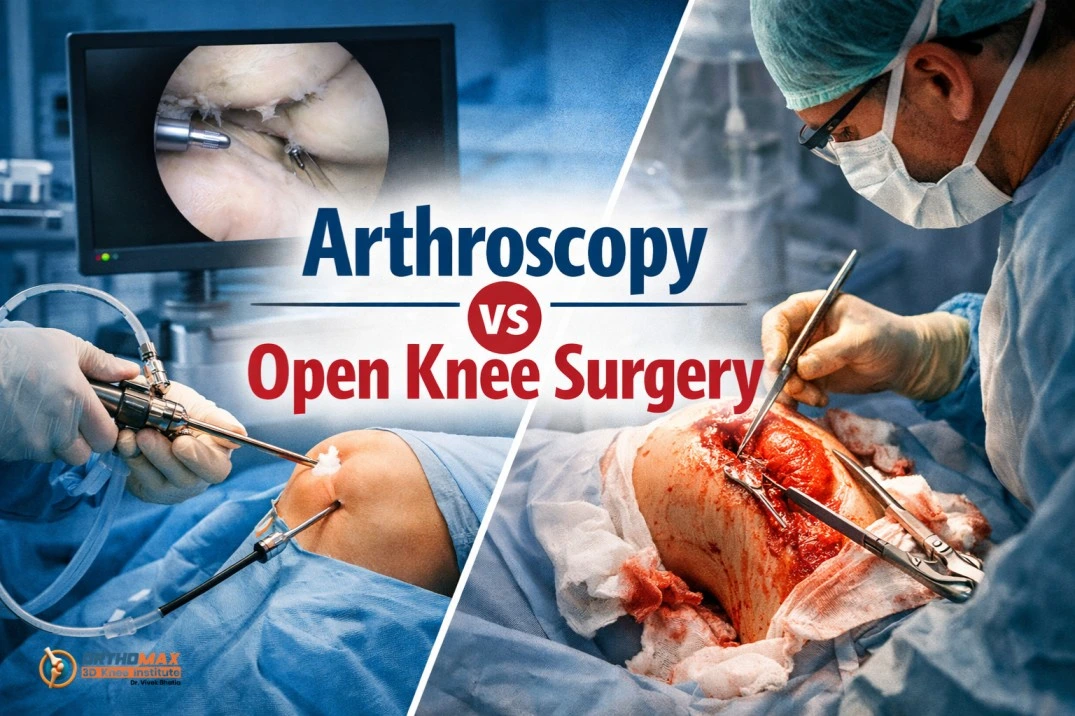
Arthroscopy vs Open Knee Surgery: Key Differences
When it comes to treating knee problems, patients often struggle to choose between arthroscopy vs open knee surgery. Both procedures are widely used in orthopedic care, but they differ significantly in terms of technique, recovery, cost, and outcomes. Understanding these differences is essential for making an informed decision—especially in India, where advanced minimally invasive procedures are becoming more accessible.
In this guide, we break down everything you need to know about arthroscopy vs open knee surgery, including benefits, risks, and open knee surgery recovery time, so you can choose the right treatment for your condition.
What Is Arthroscopy vs Open Knee Surgery?
Arthroscopy (Minimally Invasive Knee Surgery)
Arthroscopy is a minimally invasive surgical procedure where a small camera (arthroscope) is inserted into the knee joint through tiny incisions. Surgeons use specialized tools to diagnose and treat problems such as:
- Torn ligaments (ACL, PCL)
- Meniscus tears
- Cartilage damage
- Inflammation or loose bone fragments
Incision size: 5–10 mm
Hospital stay: Usually same-day discharge
Open Knee Surgery (Traditional Approach)
Open knee surgery involves making a larger incision to directly access the knee joint. It is typically recommended for:
- Severe joint damage
- Complex fractures
- Total knee replacement
- Advanced arthritis
Incision size: 10–20 cm
Hospital stay: 3–7 days
Arthroscopy vs Open Knee Surgery: Key Differences
1. Surgical Technique
The most obvious difference in arthroscopy vs open knee surgery lies in the approach.
- Arthroscopy uses small incisions and camera guidance
- Open surgery involves direct visualization through a large cut
Arthroscopy is less invasive, reducing tissue damage.
2. Recovery Time Comparison
One of the most searched aspects is open knee surgery recovery time, and this is where the difference becomes crucial.
Arthroscopy Recovery:
- Walking: Within 1–2 days
- Return to work: 1–3 weeks
- Full recovery: 4–6 weeks
Open Knee Surgery Recovery Time:
- Walking: 2–4 weeks
- Return to work: 6–12 weeks
- Full recovery: 3–6 months
Data Insight: Studies show that minimally invasive procedures reduce recovery time by up to 50–70% compared to traditional surgeries.
3. Pain and Scarring
- Arthroscopy: Minimal pain, smaller scars
- Open surgery: More pain due to larger incision
Patients choosing between arthroscopy vs open knee surgery often prefer arthroscopy for cosmetic and comfort reasons.
4. Risk Factors
Arthroscopy Risks:
- Infection (less than 1%)
- Blood clots (rare)
- Temporary swelling
Open Surgery Risks:
- Higher infection rate (2–4%)
- Blood loss
- Longer rehabilitation
Clearly, arthroscopy carries fewer risks in most cases.
5. Cost Comparison in India
Cost is a major factor in India when comparing arthroscopy vs open knee surgery.
Arthroscopy Cost:
₹50,000 – ₹2,00,000
Open Knee Surgery Cost:
₹1,50,000 – ₹5,00,000+
While arthroscopy may seem expensive initially, shorter recovery reduces overall expenses like hospital stay and lost income.
6. Success Rate and Outcomes
- Arthroscopy success rate: 85–95% for ligament and meniscus repairs
- Open surgery success rate: 90–98% for joint replacement
The choice depends on the condition, not just success rate.
When Should You Choose Arthroscopy?
Arthroscopy is ideal if you have:
- Sports injuries
- Ligament tears (ACL/MCL)
- Minor cartilage damage
- Early-stage arthritis
Best for patients looking for quick recovery and minimal downtime.
When Is Open Knee Surgery Necessary?
Despite the advantages of arthroscopy, open surgery is still essential in certain cases:
- Severe osteoarthritis
- Total knee replacement
- Complex fractures
- Failed previous surgeries
In such cases, longer open knee surgery recovery time is unavoidable but necessary for long-term results.
Arthroscopy vs Open Knee Surgery: Which Is Better?
There is no one-size-fits-all answer to arthroscopy vs open knee surgery. The better option depends on:
- Severity of knee condition
- Age and overall health
- Lifestyle and activity level
- Surgeon’s recommendation
Expert Insight: In India, over 70% of knee procedures today are arthroscopic, reflecting the shift toward minimally invasive treatments.
Recovery Tips for Faster Healing
Whether you choose arthroscopy or face a longer open knee surgery recovery time, these tips can help:
- Follow physiotherapy strictly
- Maintain a healthy weight
- Avoid high-impact activities early
- Take prescribed medications on time
- Use support aids like braces if needed
Future Trends in Knee Surgery (India Focus)
India is rapidly adopting advanced orthopedic techniques such as:
- Robotic-assisted knee surgery
- 3D imaging for precision
- Enhanced recovery protocols (ERAS)
These innovations are improving outcomes in both arthroscopy vs open knee surgery cases.
FAQs: Arthroscopy vs Open Knee Surgery
1. Which is better: arthroscopy vs open knee surgery?
Arthroscopy is better for minor injuries due to faster recovery, while open surgery is required for severe conditions.
2. What is the open knee surgery recovery time?
The open knee surgery recovery time typically ranges from 3 to 6 months, depending on the procedure and patient health.
3. Is arthroscopy painful?
Arthroscopy involves minimal pain compared to open surgery and usually allows quicker return to normal activities.
4. What is the cost difference in India?
Arthroscopy is generally more affordable (₹50,000–₹2,00,000) compared to open surgery (₹1,50,000–₹5,00,000+).
5. Can arthroscopy replace open surgery?
Not always. Severe conditions like total knee replacement still require open surgery.
Conclusion
Understanding arthroscopy vs open knee surgery is essential before making a treatment decision. Arthroscopy offers faster recovery, less pain, and lower risk, making it ideal for minor to moderate conditions. On the other hand, open surgery remains the gold standard for complex and severe knee problems despite a longer open knee surgery recovery time.
The best approach is to consult an experienced orthopedic specialist who can evaluate your condition and recommend the most effective treatment tailored to your needs.